
























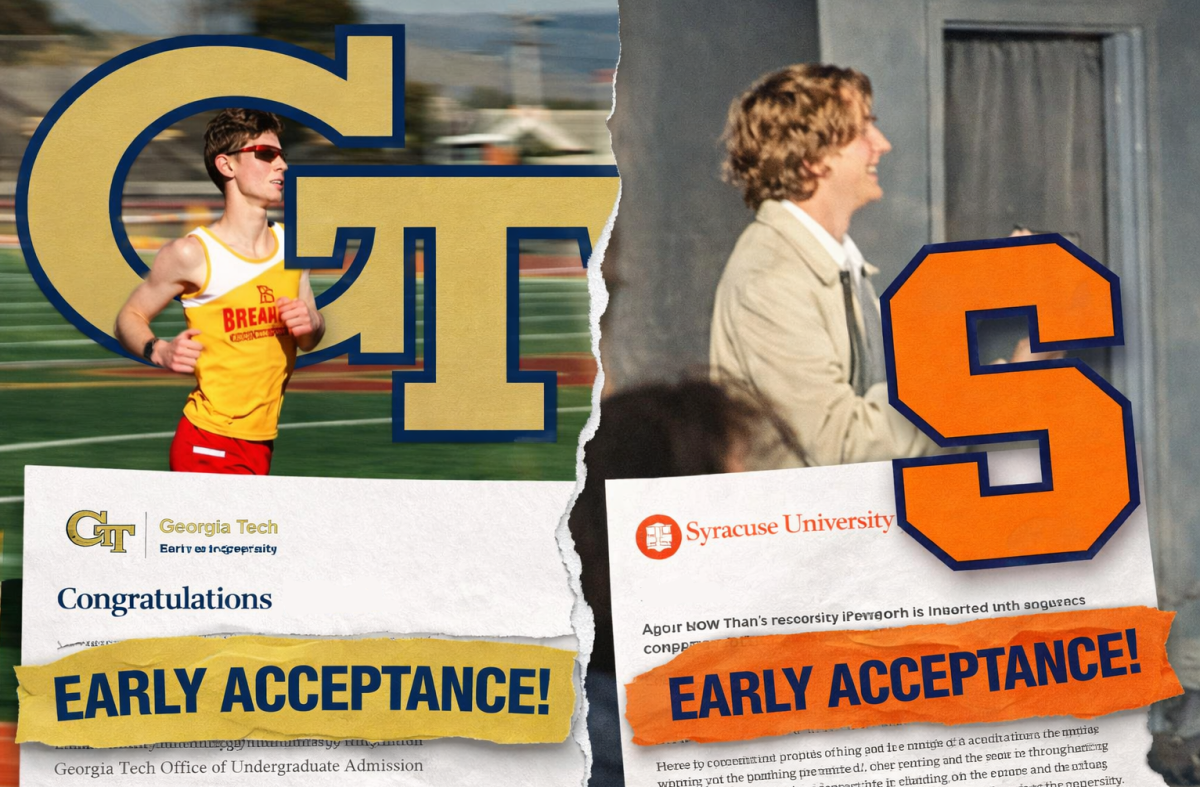
Early college acceptances are becoming a larger part of the admissions process across the United States. This year, that trend was reflected at our own school. Tony Gabrik was accepted to the Georgia Institute of Technology through Early Action, while Nicholas Papp was accepted to Syracuse University through Early Decision. Their acceptances show how different early options are being used by students nationwide and how these choices can shape outcomes.
At the most selective private universities, early applications now play a major role in who gets admitted. Schools such as Brown University and Harvard University admit a large portion of their incoming class during early rounds. In recent years, more than half of accepted students at some Ivy League schools have been admitted before Regular Decision. As a result, students who apply later face fewer available spots and more competition.
Public universities are also seeing a rise in early applications, though their systems tend to focus more on Early Action. At the University of Colorado Boulder, Early Action has become more competitive as application numbers grow each year. Students often apply early to receive quicker decisions and improve planning, but acceptance still depends heavily on grades, coursework, and academic fit.
A similar pattern exists at Rutgers University, where Early Action helps manage a very large applicant pool. Applying early can give students earlier feedback, but it does not guarantee admission. At the University of Florida, early applications have also increased. While the university does not offer Early Decision, applying early can help students show organization and readiness, though strong academics remain the most important factor.
These trends help explain why early options can benefit students. Applying early often leads to earlier decisions, which can reduce stress and give students more time to plan. Early Decision, in particular, can signal strong commitment to a school, which may strengthen an application when the student is confident in their choice. Tony Gabrik’s Early Action acceptance to Georgia Tech shows how preparation and flexibility can work together, while Nicholas Papp’s Early Decision acceptance to Syracuse shows how commitment can pay off when a student has a clear goal.
However, applying early can also create challenges. Early deadlines arrive before senior year grades are complete, which may prevent students from showing academic improvement. Some students rush essays or applications in order to meet early deadlines, which can weaken their overall submission. Early Decision can also be risky for families who are unsure about cost, since students must commit if accepted.
Overall, the experiences of Tony Gabrik and Nicholas Papp reflect a larger shift in college admissions. Early Action and Early Decision are no longer optional extras but central parts of how colleges build their classes. As these trends continue to grow at both private and public universities, students must carefully consider timing, readiness, and personal goals before choosing how and when to apply.